
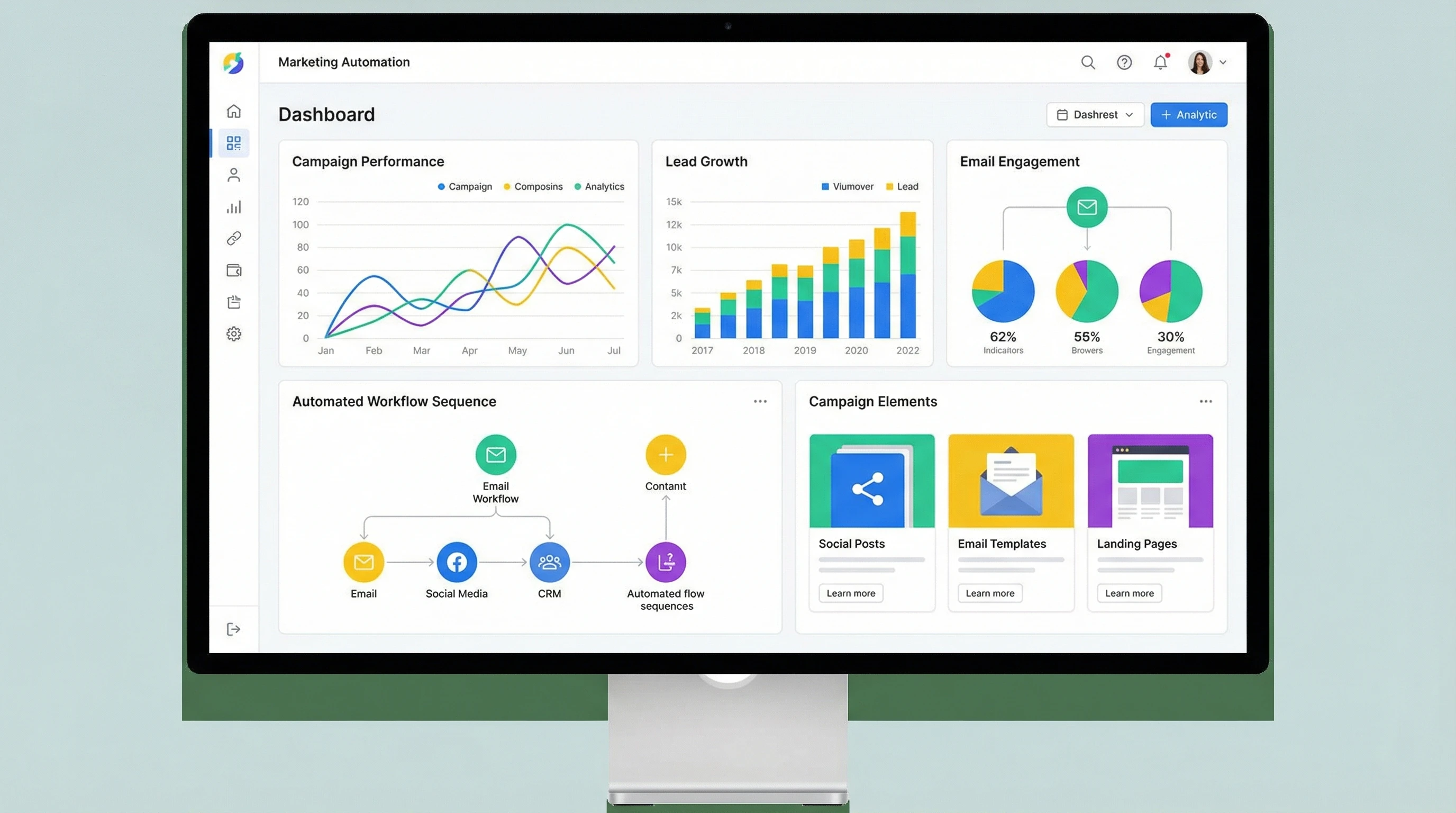
 If you’ve ever tried to juggle email marketing, social posts, customer follow-ups, and reports all at once, you know how overwhelming marketing can feel. When I started out, I tried managing everything by hand. Pretty quickly, I struggled to keep up with leads, sales, and ongoing campaigns. Tasks slipped through the cracks, and I missed growth opportunities.
I thought I just needed to work harder, but when I finally got the right marketing automation software, my daily routine changed for the better.
With the right features, I can now automate repetitive tasks, nurture more leads, and track campaign results with barely any hassle. I save time every day, and my efforts actually pay off because nothing gets forgotten.
The Biggest Reason Marketers Struggle (and How Automation Helps)
Trying to do everything manually leads to disorganization and burnout for many marketers. Even with the best intentions, it’s tough to track every lead, remember every follow-up, and analyze campaign performance without help from the right tools.
- You lose track of which contacts received which messages.
- Reports take hours to compile, slowing down decision-making.
- Personalizing campaigns for different audiences eats up time.
- Opportunities slip away when you forget to respond quickly.
The right marketing automation platform helps fix these common problems. By handling repetitive and time-sensitive tasks, you’re free to focus on strategy and creative work.
What is Marketing Automation Software?
Marketing automation software is a digital tool that helps manage, automate, and track marketing tasks from a single place. This includes email marketing, social media scheduling, customer journeys, segmentation, analytics, and more.
I use automation tools to make sure new leads get a welcome email, sales prospects don’t get forgotten, and every campaign is tracked from start to finish.
Here are some of the core functions you’ll find in most marketing automation systems:
- Email Campaign Management: Schedule and automate emails for different customer segments.
- Lead Scoring and Nurturing: Automatically rate leads and send them targeted content based on their behavior.
- Analytics and Reporting: See what’s working and where to improve by tracking opens, clicks, conversions, and more.
- Multichannel Coordination: Manage campaigns across platforms like email, SMS, and social media from one dashboard.
Must-Have Features in Marketing Automation Software
When I choose a marketing automation platform, there are several features I look for. Without these, I end up putting in more effort than I should or missing key growth opportunities. So, here are the essentials I always check for.
1. Simple Drag and Drop Workflow Builder
A good automation builder lets me map out customer journeys visually by dragging and dropping triggers and actions. I build sequences for welcome emails, reengagement, and event follow-ups in just a few clicks. This kind of interface removes the tech headache and speeds up new campaign launches.
2. Powerful Segmentation and Personalization
The ability to sort my contacts into groups based on behaviors and interests makes all my campaigns more relevant. I want to send personalized messages so each contact feels like I’m talking directly to them. Look for advanced segmentation so you can target by location, purchase history, engagement, and more.
3. Multichannel Campaign Capabilities
Modern customers move seamlessly from email to SMS to social media. My favorite tools make it easy to reach people on their preferred channel, all from one place. Features should include automated email sends, SMS broadcasts, and even automatic posting to social channels or messaging apps.
4. Real Time Analytics Dashboard
I want to see exactly how my campaigns are performing without digging through endless menus. Real time analytics with simple dashboards give me instant insights into open rates, clicks, conversions, and revenue at a glance. Customizable reports help me prove value to clients and spot ways to improve campaigns.
5. Lead Scoring and Automated Nurturing
Not every contact is ready to buy right away. Good automation tracks which actions contacts take, scores their “readiness,” and sends the right content at the right time. I often set up automated lead nurturing campaigns so my hottest leads get fast attention while colder leads get introduced gradually.
6. Integrations With Other Tools
Marketing tools don’t work in a vacuum. I always check that my automation platform connects easily with CRM systems, ecommerce platforms, landing page builders, and analytics tools. Integration saves me from manual data entry and helps all my systems work together for better results.
7. GDPR and Data Privacy Compliance
Staying compliant with privacy rules like GDPR and CAN-SPAM is really important. I look for software that makes it easy to manage consent, handle opt-outs, and keep all my contact data secure. Built-in compliance tools help me avoid legal headaches down the road.
Some platforms also support CCPA requirements if you’re marketing in California or internationally, so it’s worth checking if your provider offers these features. These built-in tools and alerts give extra confidence that your marketing is legal and ethical both now and as rules change.
How Marketing Automation Software Helped Me Grow
When I first tried automation, I started with just email campaigns. Within a week, I noticed I saved hours while more leads responded. After adding lead scoring and smarter segmentation, I found my campaigns were making more sales without extra work. Here’s how automation improved my results:
- I never forget to follow up with new leads thanks to instant task alerts.
- Personalized emails improved my open and click rates almost overnight.
- I build complex campaigns quickly with visual workflow tools.
- Consistent reporting helps me test, learn, and improve every month.
These features made it possible for me to grow my reach and spend more time on creative work, like campaign ideas and content, rather than repetitive tasks.
Since automating, I’ve also noticed that team collaboration has become smoother, as workflows are clearly outlined and everyone can track progress with ease. Marketing moves faster, and results are easier to evaluate, which keeps everyone motivated and focused on the goals that matter.
Why the Right Software Makes All the Difference
Easy Learning Curve and Support
I’ve tried complicated systems that made me feel stuck. The best marketing automation tools have quick tutorials, live chat, or a helpful knowledge base. This support helps me get setup fast, even if I’ve never used automation before.
Allinone vs. Niche Solutions
I like platforms that combine email, SMS, social marketing, and CRM in one spot. This avoids juggling multiple logins or paying for many tools. An allinone solution gives me everything I need in a simple monthly plan.
Community Feedback and Trusted Reviews
When choosing software, I trust other marketers’ feedback almost as much as feature lists. Software with active online communities and regular updates usually means it is kept up to date and well-supported. Checking real user reviews and case studies helps me see how the tool works in real situations.
Try Marketing Automation for Yourself
If you’ve never tried automation, starting with a free trial or an entry-level plan is a smart move. You get to test out the essential features, see what’s easy to use, and decide if the tool really fits your workflow.
- No coding skills needed. Most platforms guide you step by step.
- No extra hardware or advanced setup required.
- A good trial can show you instant time savings and keep future tasks organized.
I didn’t realize how much time and energy automation would free up for me until I used it myself. Chances are, you might find the same.
Pick a marketing automation platform with the right features, and you’ll see daily marketing tasks get easier while your results improve dramatically. It’s a step that can really pay off for your business in the long run.