
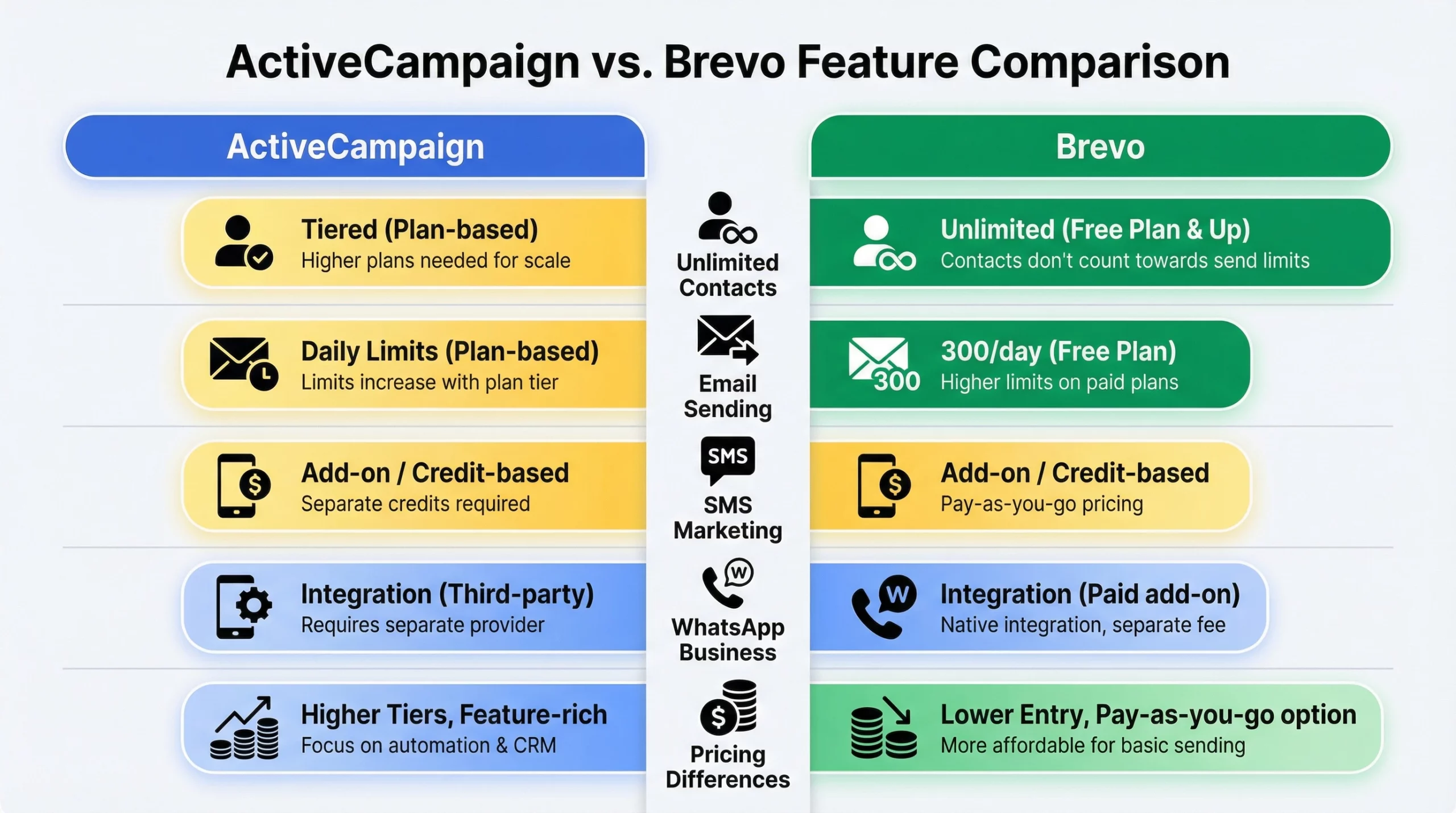
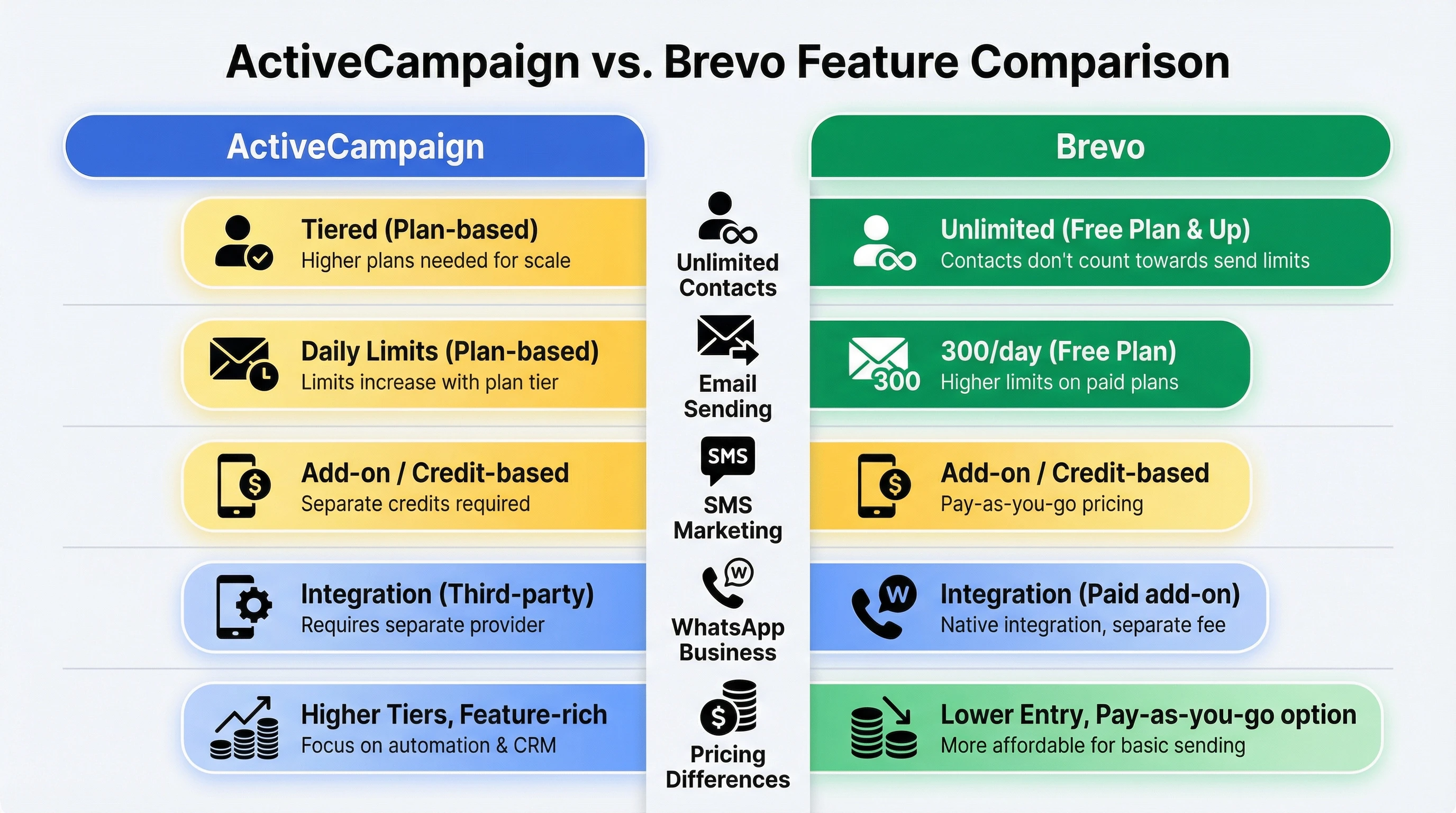
Email marketing platforms have changed a lot by 2026, but one debate keeps coming back: ActiveCampaign vs. Brevo. Picking the right tool can make the difference between a lean marketing budget and an expensive, bloated bill. On one side, you have ActiveCampaign, known for advanced automation but with a cost structure that rises along with your list size. On the other side, there’s Brevo (formerly Sendinblue), which lets me keep unlimited contacts while only paying for the number of emails I send. This single difference in pricing can have a big impact if I’m managing a large list on a slim budget.
I’m always working to make sure I get the best value for the features I actually use. Knowing how these pricing models stack up can keep my business or organization profitable, and that’s really important in 2026. My goal here is to share what’s changed, what really matters, and what actually saves money in the long run. Let’s jump in and see which one is right for you.
The Pricing Model Clash: Contacts vs. Sends
ActiveCampaign and Brevo go about pricing in totally different ways. ActiveCampaign charges based on the number of contacts I keep in my account. This means my bill goes up as my list grows, even if I don’t email every contact every month. Brevo works differently; my price only goes up if I send more emails each month. The number of contacts I import doesn’t affect my bill at all. This one fact drives the whole “budget battle” between them.
| Platform | Free Plan | Pricing | Contacts | Channels |
|---|---|---|---|---|
| Brevo | Yes (300 emails/day) | Cheaper | Unlimited | Email, SMS, WhatsApp |
| ActiveCampaign | No (Trial only) | Premium | Capped | Email focus |
Every month, I ask myself how many people I actually email, and how often. If I have 10,000 or even 100,000 subscribers but only send a handful of newsletters or updates, Brevo’s pricing keeps my costs low. ActiveCampaign costs climb as my audience grows, no matter how often I hit “Send.” This model difference shapes your budgeting approach; that’s worth weighing before you commit.
Platform Overviews
What is ActiveCampaign?
ActiveCampaign is an email marketing and automation platform that’s known for its smart automation features, advanced audience segmentation, and high deliverability rates. It’s built for businesses who need flexible “If/Then” workflows, tons of triggers, and the power to automate almost every step of their customer experience without jumping between tools.
Who is ActiveCampaign Best For?
- Marketers who run daily or weekly campaigns with many segments.
- Advanced users who need complex automations and robust logic.
- Businesses with high-ticket offers that rely on maximum deliverability for sales and signups.
ActiveCampaign Pros & Cons
Pros:
- Powerful automation and segmentation tools.
- Top-level deliverability (consistently above 90%).
- Extensive integrations with CRMs, ecommerce tools, and lead capture forms.
Cons:
- No real free plan, only a short trial.
- Costs rise quickly with list size increases.
- Interface can feel complex for newcomers.
What is Brevo?
Brevo, the new name for Sendinblue, is a modern email service that covers not just email but also SMS, WhatsApp, and transactional messaging. It lets me store unlimited contacts and only pays attention to how many emails I actually send—a structure I find really helpful for newsletters, longterm audience growth, and side projects.
Who is Brevo Best For?
- Organizations and creators with big lists but low to medium sending frequency.
- Teams exploring multiple channels, like SMS and WhatsApp, alongside traditional email.
- People looking for a strong free plan and affordable upgrades.
Brevo Pros & Cons
Pros:
- Unlimited contacts on every plan.
- Free plan includes 300 emails per day.
- Built-in SMS and WhatsApp campaigns for a full communication suite.
- Simple, easy to use interface for quick campaign launches.
Cons:
- Deliverability rates are lower than top competitors.
- Automations are less advanced compared to ActiveCampaign.
- Customer support can lag on entry-level plans.
Direct Comparison: Pricing, Value, and Features
ActiveCampaign vs Brevo Pricing: Real Examples
I often see business owners shocked by the price jump when their contact list gets larger in ActiveCampaign. For example, with 50,000 contacts, ActiveCampaign typically charges around $300 per month (depending on the plan and country). If I only email my list once per month, Brevo lets me do that for about $29 per month. That’s because on Brevo I’m only paying for the actual messages I send, not how many people are in my database.
This setup means that for anyone running a newsletter, school, club, or group—where contacts matter more than frequency—Brevo can save hundreds of dollars monthly. But, if I’m emailing often, especially with advanced automations, ActiveCampaign might be a smarter long-term investment because of the extra features and strong email deliverability.
Brevo Free Plan: What Do You Get?
- Send up to 300 emails per day for free.
- Unlimited contact storage (import as many as I want).
- Access to SMS and WhatsApp channels included.
The free plan is perfect for side projects or teams just starting. Upgrading is easy if my sending needs pick up. This gives startups flexibility and room to grow without surprise fees.
ActiveCampaign Free Trial: How it Works
- 14-day or 30-day trial, depending on promotions.
- All features unlocked to test them out with live campaigns.
- No ongoing free tier after the trial period, so you’ll need to decide before ramping up.
Once my trial ends, I can’t email my list without moving to a paid plan. That makes it critical to dig into the features and feel out the interface before committing.
Round 1: The Unlimited Contacts Advantage (Brevo Takes It)
This is where Brevo really pulls ahead for anyone with a large or growing audience. Let’s say I manage a community newsletter with 50,000 members but only want to email updates once a month. With Brevo, my costs stay low because the charge is connected to sends. If I switch to daily emails or use detailed drip campaigns, the price can add up, but the break-even point is much higher than with ActiveCampaign.
Here’s how it looks for 50,000 contacts sending one email a month:
- Brevo: ~$29/month
- ActiveCampaign: ~$300/month (regardless of sending frequency)
If usage is similar, Brevo keeps my costs predictable and my list size can grow without worry. For anyone focused on steady but infrequent messages, or organizations that collect more signups than sales, unlimited contacts removes a lot of budget stress. I know that growth won’t be punished with higher monthly bills.
Round 2: Deliverability – Where ActiveCampaign Wins
Now to the topic of Brevo deliverability. This is really important if sales and reputation are on the line. My own testing and public reports show that Brevo’s average open rates reflect a deliverability of about 75% to 80%. That’s decent for updates, community news, or regular business messages. But, if high-ticket product launches, flash sales, or affiliate offers are involved, this number feels low compared to ActiveCampaign’s top-level rates (often around 93%).
The higher deliverability means more messages land in the inbox instead of the promotions or spam folder. I notice a clear difference in reply and click rates. If every email counts, I recommend ActiveCampaign—even at a higher price—because it brings real value. For general updates and content, Brevo’s numbers are fine, especially with the savings involved.
Round 3: Brevo Training & Ease of Use
Free Training with Brevo Academy
One area where Brevo stands out is onboarding and education. With Brevo Academy, I get free video tutorials, walkthroughs, and step-by-step guides made for beginners. I’ve sent friends and clients to Brevo’s training when they want to get a campaign running fast, even without much tech experience. Everything from setting up lists to building basic automation is covered, and it’s all free.
Multichannel Campaigns – More Than Just Email
Brevo isn’t just an email tool. I can launch SMS and WhatsApp campaigns straight from the dashboard without signing up for separate services or paying more up front. This matters when I’m trying to reach people where they actually hang out. ActiveCampaign focuses on email, with only limited SMS features and no WhatsApp option. If I want true multichannel marketing without a pile of separate tools, Brevo keeps things simple and budget-friendly.
Interface and Builder Styles
Brevo uses a simple, straightforward campaign builder. I set up emails top down: add a list, build my message, set the timing, and send it off. It’s great for getting things done quickly and with little confusion.
ActiveCampaign uses a visual builder that maps out automation paths like a mind map. I can create complex, branching workflows that react to user clicks, tags, and time gaps. This is next-level cool for advanced users but can be intimidating for beginners. Expect a learning curve if that’s new to you.
Brevo’s 2026 Push: Transactional Emails Get Top Priority
I can’t ignore what’s new for 2026. Brevo is putting the spotlight on transactional emails. This means receipts, order confirmations, and invoices—messages that absolutely have to arrive on time and look professional. This approach is a big move from just newsletters and regular updates, and for many ecommerce sites or local businesses, this is a major upgrade.
With Brevo, I get templates and reliable sending for these messages right inside the platform. No more juggling another transactional email tool or paying extra fees. ActiveCampaign remains focused on classic marketing campaigns, so if transactional messages are a cornerstone of your business, Brevo keeps things smooth, unified, and affordable.
User Feedback & Platform Reputation
- ActiveCampaign: Users love the automation features, wide integration options, and strong deliverability. Some think the interface is bulky and the price grows too quickly with larger lists.
- Brevo: Users appreciate predictable low pricing, unlimited contacts, and how easy it is to learn. The main complaints are around deliverability and slower customer support on cheap plans.
The main thing I see is that the right tool depends on how you mail your audience, what kind of results you need, and if multichannel or transactional messaging matters. Both platforms stay updated and reliable, so it comes down to your needs and your budget.
The Verdict: Which One Works Best for You?
I look at these comparisons and focus on ROI, not just feature lists. Here’s my blunt advice based on the last year’s campaigns and what’s trending now in 2026:
Pick Brevo if:
- You store a big list but only send emails occasionally (like monthly newsletters or announcements).
- Your budget is tight, and you want to pay for what you actually send, not how many people sign up.
- You want email, SMS, WhatsApp, and transactional messages all in one dashboard.
- You or your team are new to email marketing and want easy, free training to get started fast.
Stick with ActiveCampaign if:
- You email your audience every week or more and can’t afford for messages to miss the inbox.
- You use advanced targeting, “If/Then” flows, and want to max out your funnels.
- Your campaigns demand high deliverability for big ticket sales, webinars, or launches.
- You want integrations with lots of business tools and really deep reporting.
Final Thoughts
I prefer to match my tools to my actual business—never paying for things I won’t use or will outgrow too soon. If audience size matters more than frequent sending, Brevo stretches my marketing budget the furthest. But if every single email is a potential deal or client call, ActiveCampaign’s high deliverability is worth the premium price tag. The trick is picking based on your real-world business, not just features or hype. That’s the best way to win the “budget battle” and make your marketing spend count.
If you’ve tried both, or need help choosing, share your story below. I always like helping others get more from their marketing stack and making smart decisions that fit their growth plans and wallets.
Thank you for the detailed comparison. This really helps as someone new to email automation and CRM tools. Since I’m just learning about these workflows, could you explain with a simple example how a basic email automation (like a welcome series or lead follow-up) would actually look in ActiveCampaign versus Brevo? Specifically, which steps would a beginner find easier or harder on each platform, such as setting up automation, managing contacts, or tracking responses? Understanding the actual workflow experience would make it much easier to choose between them.
That is a fantastic question. The ‘on-paper’ feature lists often hide the reality of the daily workflow.
Here is the concrete difference in experience:
Setting up a Welcome Series:
In Brevo: It feels like a Checklist. You select a trigger (e.g., ‘Subscriber joined list’), then add a step to ‘Send Email,’ then ‘Wait 2 days.’ It’s linear, top-to-bottom, and very fast to set up.In ActiveCampaign: It feels like a Flowchart. You drag and drop actions onto a canvas. You can easily split the path (e.g., ‘If they clicked the link, send Email A; if not, send Email B’). It feels more like ‘designing a journey’ than just sending a message.The Verdict: If you want to set it and forget it in 10 minutes, Brevo is easier. If you want to build a logic-based funnel that reacts to user behavior, ActiveCampaign is more intuitive because you can ‘see’ the logic mapped out visually.
Awesome article. I actually had not heard of these campaigns before, but going over and signing up right after this. Very interested and eager to see them in action, especially activecampaign. Lots of information, but simple and straightforward, love the side by side comparison and unbiased and honest opinions. Good introduction, need to get started and find out for myself.
This comparison really highlights how different pricing models can completely change long-term marketing costs. I am curious, at what point of sending frequency does Brevo start to lose its budget edge compared to ActiveCampaign for a list of around 25,000 to 50,000 subscribers? Also, have you noticed meaningful differences in inbox placement for affiliate or promotional campaigns specifically, or does deliverability only become a major factor at very high send volumes?