
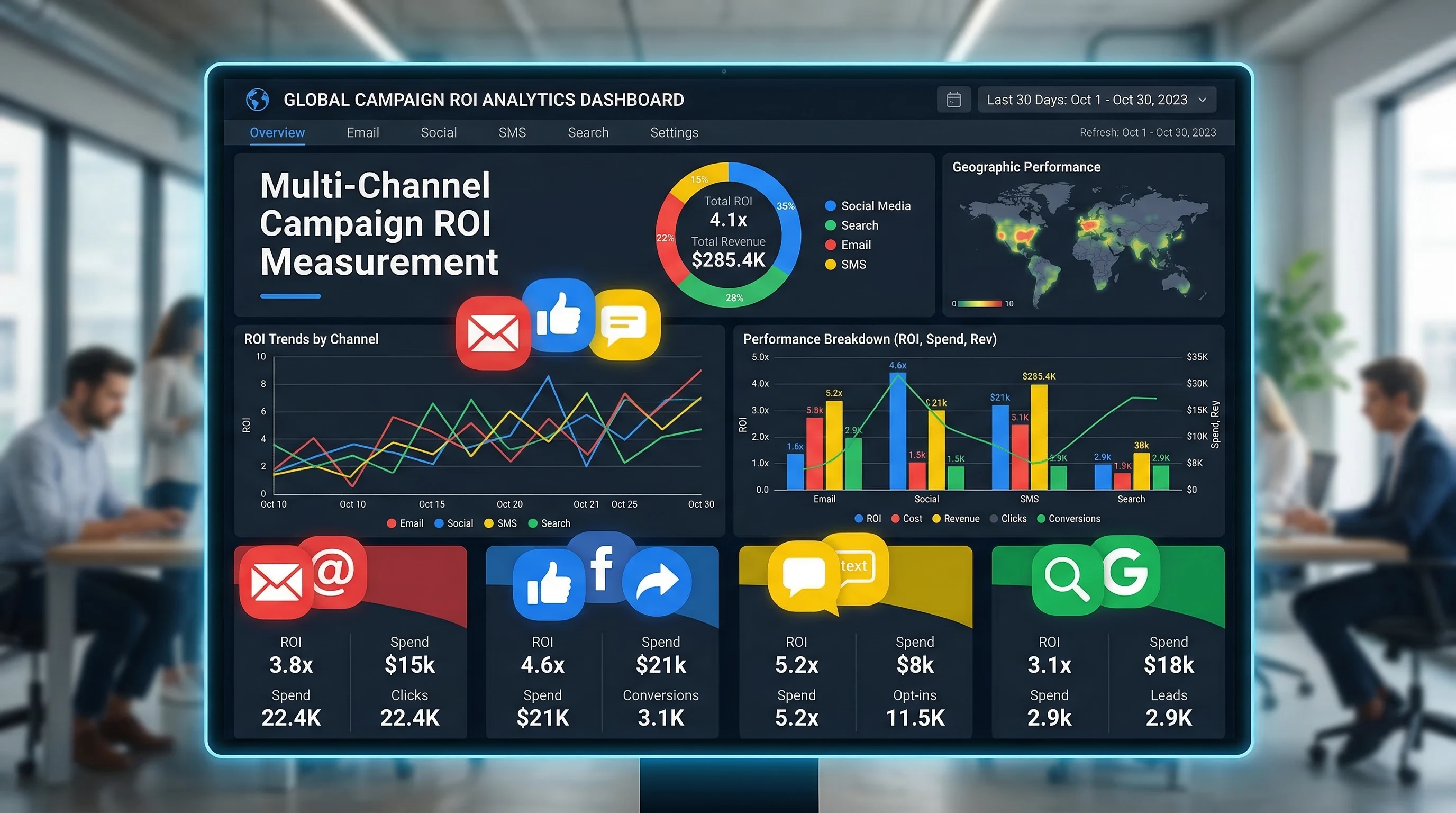
Tracking the return on investment (ROI) from multichannel marketing automation campaigns can be both exciting and challenging, especially when your business is investing across different digital platforms. Clear ROI measurement helps me see what’s working in my marketing and what needs to be adjusted or improved. With more businesses using automation tools to connect with customers on email, social media, SMS, and more, learning to measure ROI accurately has become really important for anyone who wants results.
Why Measuring ROI Matters in Multichannel Marketing Automation
Marketing through several channels at once can give campaigns a big boost, but it also creates more moving parts to track. When I invest in email campaigns, social ads, retargeting, and SMS, I want to know which one drives sales, qualified leads, or builds loyalty. Measuring ROI for these efforts doesn’t just help me justify spending; it also guides smarter decisions and lets me double down on what works.
ROI shows me the real value I’m getting from each campaign or channel by comparing what I spent to what I gained in revenue, conversions, or engagement. Research from HubSpot highlights that well-measured marketing automation can improve lead generation by over 80%. Multichannel campaigns using automation tools can also increase purchase rates by as much as 287% according to Omnisend. Seeing numbers like these highlights why tracking ROI carefully can pay off in the long run. Keeping track of these numbers not only makes it easier to report results, but also boosts confidence when allocating the marketing budget for future campaigns.
Understanding the Building Blocks of Multichannel ROI
Getting my head around multichannel ROI means looking at the basics. ROI is usually calculated using the formula:
ROI = (Net Profit / Investment) × 100
For marketing campaigns, net profit means the revenue directly linked to marketing minus the total costs. Multichannel campaigns bring extra layers to this calculation because costs are split between tools, ad budgets, personnel, and overlapping audiences on different platforms. This complexity means I need reliable data for each channel and a way to connect marketing actions to business results.
- Direct Revenue: Sales or leads that can be traced back to a specific campaign or touchpoint.
- Campaign Costs: Spend on software, staff time, creative assets, paid ads, and third-party services.
- Attribution Modeling: How credit is assigned, e.g., to the first interaction (first-touch), the last action before a conversion (last-touch), or a mix (multitouch).
Without a good understanding of these factors, interpreting results leads to guesses instead of real decisions.
A lot of marketers, especially those new to automation, may overlook indirect benefits like increased brand awareness, higher customer retention, or upsells that happen after the initial conversion. Even if these are harder to measure, keeping a log of such changes can help paint a more realistic picture of overall marketing impact.
How to Get Started Measuring ROI in Multichannel Automation
Stepping up to track ROI starts with a few practical steps. Here’s how I break it down:
- Define Clear Goals: Am I aiming for sales, leads, signups, or repeat purchases? Goals should be concrete so performance can be compared across channels. For example, measuring form submissions on a landing page versus completed checkouts helps me see which steps in the funnel are working best.
- Set Up Tracking: Every channel (like email, Facebook, Google Ads, SMS, etc.) needs links, tags, or tracking codes. I use UTM parameters for web campaigns and make sure automation tools report on delivered, opened, and converted metrics. Sometimes, I set up conversion pixels or connect CRM records to different campaigns so I don’t miss valuable data.
- Choose Attribution Models: I decide how to assign value; for instance, does the last click get all the credit or do I spread it over several touchpoints? Testing different models (like linear, time-decay, or position-based) can reveal new insights, so I check in on these choices periodically.
- Match Expenses and Results: Gather every cost, from ad spend to software fees, and line it up against the revenue or outcomes. This includes little things like copywriting or outsourced graphics that add up over time.
- Analyze and Adjust: With numbers in hand, I look for patterns, spot underperforming channels, and adjust budgets or tactics. Regular review meetings or reports with the team make it easier to spot these patterns quickly and stay agile when the market changes.
These steps let me get a clearer view of how my campaigns are working together, not just in isolation.
Challenges I Run Into When Measuring Multichannel ROI
Even with careful setup, I find that measuring ROI in multichannel automation can hit some bumps. Here are common headaches, and how I tackle them:
- Data Silos: Campaign data lives in different tools and platforms, making it hard to connect the dots. I use integration tools or unified dashboards to bring the numbers together.
- Attribution Headaches: Sometimes, a customer clicks on a Facebook ad but converts days later via email. Picking the right attribution model helps make sense of this pattern.
- Cross-device Challenges: Users switch from mobile to desktop, or even shop in-store. Connecting their touchpoints means using advanced analytics.
- Hidden Costs: I’m careful to include all costs, like content creation, overtime pay for team members, and the automations themselves, so ROI isn’t overestimated.
Another issue is adjusting for seasonality or outside influences. For example, a massive spike in sales might not only be due to an email blast, but also because of a trending topic online or a competitor’s campaign ending. Sticking to regular reviews and context helps tone down these effects.
Dealing with Attribution and Data Matching Gaps
Choosing attribution models is a big factor in how I see results. If I give credit only to the last click, I could miss out on the true impact of emails or display ads earlier in the adventure. Tools such as Google Analytics, HubSpot, or custom reporting in marketing automation platforms can use multitouch attribution that reflects the real impact of each channel.
For stronger data matching, I use CRM integrations or customer data platforms (CDPs). These systems bring data from ads, emails, onsite activity, and offline sources into a single customer profile. Being able to match the same user across channels and over time gives me the confidence to trust my ROI numbers. For small businesses, connecting even a basic CRM to website analytics and ad platforms can make a big difference.
Best Practices for Tracking ROI in Multichannel Automation
After years of tracking results, I’ve developed a few habits that keep my ROI measurement steady and reliable:
- Use Consistent KPIs: Standardizing key performance indicators makes comparisons easier. I pick metrics like cost per acquisition (CPA), conversion rate, and lifetime value (LTV) for every channel.
- Automate Data Collection: Manual reporting leads to errors. Automation tools with built-in analytics or integrations with third-party dashboards cut down on mistakes and save time. When possible, I set up daily or weekly automatic reports.
- Test Channels Regularly: Running A/B tests or switching up content across channels helps me learn where ROI is highest. Regular test-and-learn cycles mean my strategies stay fresh. Experimenting with new formats, such as video instead of text, sometimes uncovers unexpected high performers.
- Calculate Incremental ROI: Sometimes, a test group gets the campaign while a control group doesn’t. Comparing these groups reveals how much incremental lift a channel or combination delivers.
Applying Insights to Campaign Strategy
Measuring ROI isn’t just about numbers on a report. I use what I learn to stop spending where results are weak and put more resources into winning channels or campaign tactics. Sometimes, the big win comes from refining creative, moving budgets from paid social to SMS, or running retargeting ads on platforms where users are most engaged. Being able to present clear ROI figures builds trust with leadership and gets faster approval for new campaigns. I also document lessons learned from each campaign to make it easier to repeat successes or avoid past mistakes in the future.
Real-world Example: Measuring ROI Across Multiple Channels
To make things clearer, here’s a simple example from my own experience. Suppose I ran a holiday campaign using email, paid search, Facebook ads, and automated WhatsApp messages. I set up UTM codes, tracked all costs (including design and copywriting), and used a multitouch attribution model. After the campaign ended, I found:
- Email brought in the most direct conversions with the lowest CPA.
- Paid search cost more per lead, but drove many first-time visitors who later bought via email follow-ups.
- Facebook ads increased brand engagement, though actual sales happened elsewhere.
- WhatsApp had the highest repeat purchase rate from existing customers.
By bringing together results, I was able to show clear ROI for each channel and justify moving some budget toward email and WhatsApp for next time.
Frequently Asked Questions
Here are some questions I often see from marketers figuring out multichannel ROI measurement:
Question: What should I do if my automation tool doesn’t track all channels?
Answer: I look for third-party analytics or dashboard tools that can pull in data from different sources. Often, this means connecting marketing automation, CRM, and analytics platforms. Sometimes, exporting raw data and using spreadsheet tools for custom reports helps fill the gaps too.
Question: How do I measure ROI if part of my campaign is offline?
Answer: I use promo codes, custom landing pages, or direct call tracking to tie offline efforts back to digital campaigns. Estimation models also work for connecting in-store and online touchpoints. Even a small amount of offline tagging (like unique phone numbers or printed QR codes) can make a difference.
Question: Are there quick tips to improve attribution accuracy?
Answer: Making sure UTM parameters are always used, campaigns are properly tagged, and CRM tools are synced regularly keeps attribution as accurate as possible. Training the team on tagging best practices also helps avoid missing data.
Final Thoughts on Multichannel Marketing ROI
Being able to track, understand, and improve my ROI from multichannel marketing automation has been a big part of making better marketing decisions. With clear goals, smart attribution models, and good tools, measuring ROI turns complex campaigns into clear, actionable results. As channels and technology continue to grow, staying focused on data quality and connecting results to business outcomes keeps my campaigns on track and my strategies effective. Consistently reviewing and refining the measurement process will keep me prepared for whatever new platforms or opportunities come my way.