
B2B SaaS startups face a unique set of challenges when it comes to lead nurturing. Teams tend to be lean, goals are ambitious, and there’s little time for manual outreach. Automating lead nurturing workflows helps create meaningful connections with prospects, keeps your team focused on highimpact work, and builds scalable marketing and sales systems for the future.
In my experience, putting the right automations in place early has a massive impact on conversion rates, customer satisfaction, and pipeline growth. I’m going to break down my honest review of how automation fits into a modern B2B SaaS startup’s lead nurturing strategy. This article covers the software I’ve used, smart workflow examples, and best practices for building automation that actually drives results. If your startup aims to move beyond basic email blasts and create a truly effective funnel, this detailed guide should give you everything you need.
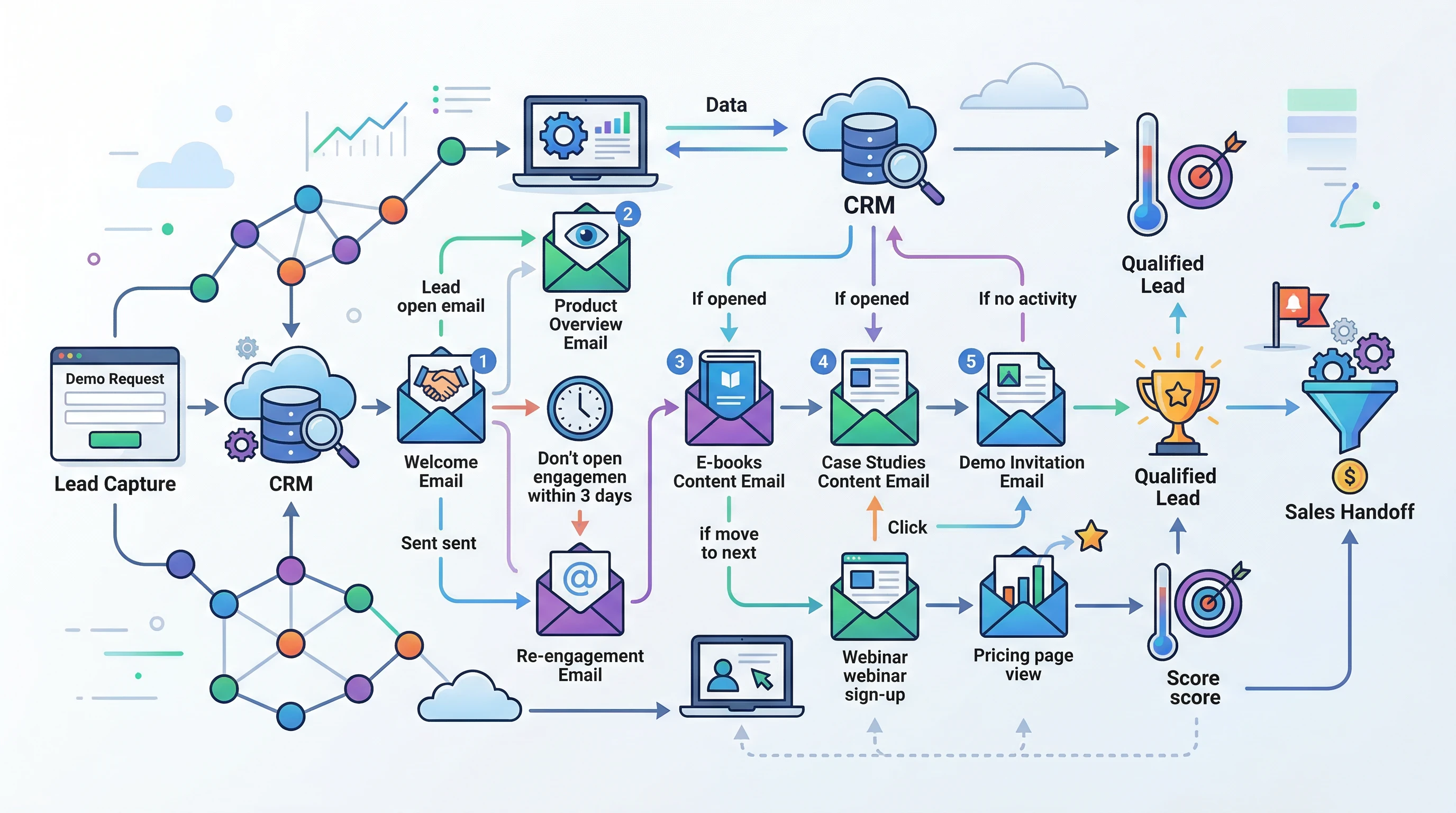
Topic: How To Automate Lead Nurturing Workflows For B2B SaaS Startups
Target Audience: B2B SaaS founders, marketers, revenue leaders, growth teams
Core Benefits: Scalable marketing, better conversion rates, reduced manual work, improved lead qualification
Author: Longtime SaaS marketer and automation enthusiast
Rating For Automation In SaaS Lead Nurturing: 4.9/5
What Is Lead Nurturing For B2B SaaS?
Lead nurturing means guiding potential customers through the sales funnel, from the first sign of interest all the way to purchase. In B2B SaaS, this typically means taking website visitors, demo signups, or free trial users, and engaging them with targeted content and outreach until they’re ready to buy.
I find that lead nurturing works best when it’s built like a structured adventure. Every interaction is a chance to educate, build trust, and move the lead closer to the right solution for their needs. This often involves sending educational emails, offering webinars, inviting direct conversations, sharing customer stories, and using personalized messaging to address specific pain points.
Why is this important for SaaS? Most buyers are researching multiple solutions, comparing features, and want proof that your software really fits. Consistent, relevant follow-up builds confidence and increases the chances of turning a qualified lead into a paying customer.
Key Challenges B2B SaaS Startups Face With Lead Nurturing
When I started building automated workflows, these were the big roadblocks I kept running into:
- Too much manual work: Teams often spend too much time sending emails or updating CRM records by hand.
- Poor segmentation: Emails go to the wrong people or at the wrong time, which leads to lost opportunities.
- Inconsistent follow-up: It’s easy to lose track of leads or forget to check in after a trial ends.
- Lack of personalization: Automation can turn into generic spam if it’s not set up thoughtfully.
- Low visibility: Without automation, it’s hard to track which messages work or what leads want next.
For a startup, these problems block scaling reliably. Automating lead nurturing solves most of them and frees up your sales and marketing teams for higher value interactions.
The Building Blocks Of An Automated Lead Nurturing Workflow
I approach automation as a set of layers. Each workflow fits together to cover a specific part of the lead adventure. Here are the main building blocks I recommend:
- Lead capture: Collect leads with forms, chatbots, or product signup flows.
- Lead enrichment: Automatically gather details about company size, industry, or role to personalize follow-up.
- Segmentation: Sort leads by interest, company type, or product fit right after capture.
- Multistep email sequences: Send educational, timely emails designed to fit each segment’s needs.
- Behaviorbased triggers: Start certain automations when a lead opens an email, books a demo, or uses a feature.
- Lead scoring and qualification: Use scores to measure how ready a lead is for sales outreach.
- CRM sync and task creation: Push leads and activity updates into your CRM and autocreate follow-up tasks for team members.
Bringing these together builds a pipeline engine that works for you all day, every day.
Popular Automation Tools For B2B SaaS Lead Nurturing
The choice of software depends on your team’s needs and budget. I’ve worked with many tools and can vouch for several that balance power and ease of use:
- HubSpot: Excellent for allinone CRM, marketing automation, and email sequencing. The workflows tool lets you automate emails, lead scoring, and sales handoffs. Integrates with almost every SaaS platform.
- ActiveCampaign: Great for startups wanting advanced automations without a big price tag. Visual workflows, flexible triggers, and deep integrations.
- Autopilot: Visual builder that’s simple and fun to use, with easy adventure mapping for onboarding, trial nurturing, and surveys.
- Pardot (by Salesforce): Strong choice for SaaS companies using Salesforce as their CRM. It supports complex logic and powerful lead scoring.
- Outreach.io / Salesloft: Perfect for pairing automated sequences with sales team call tasks and follow-ups.
- Zapier / Make (formerly Integromat): Ideal for connecting tools that don’t “talk” to each other directly. I use these often to sync data from signup forms into CRM or Slack.
I recommend choosing platforms that will support your startup’s growth for the next two or three years. Migrations are possible later, but picking something scalable from the start saves headaches.
StepByStep Guide: Automating Your Lead Nurturing Workflows
Automating lead nurturing takes some planning, but once the pieces are in place, the difference in both efficiency and results is obvious. Here’s how I usually set it up for a B2B SaaS company.
1. Map the Customer Adventure for Your ICPs
Before touching automation, I always define the ideal customer profile (ICP) and the adventure they go through. This covers touchpoints from first visit to paid signup. For each stage, I identify what questions, concerns, or motivations the lead has. Sketching this out lets you design email sequences and automations that match actual needs instead of guessing.
2. Identify Triggers and Desired Outcomes
Triggers are events that tell your automation when to start. Common triggers in B2B SaaS include:
- Filling out a demo request or pricing form
- Signing up for a free trial
- Attending a webinar
- Visiting demo or pricing pages multiple times
- Opening or clicking on a specific marketing email
I set clear outcomes for each workflow. For example, after a trial signup, my goal might be to have 40 percent or more book a demo within 14 days. Defining these outcomes keeps automations focused on actions that matter for revenue.
3. Segment Leads Automatically
Segmentation is the key to making automation feel personal. I recommend using form fields, enrichment tools (like Clearbit or Apollo), and activity data to automatically assign leads to:
- Company size (SMB, MidMarket, Enterprise)
- Industry (SaaS, Agencies, Ecommerce, etc.)
- Role (Decision maker, Influencer, End user)
- Product interest (Core features or addons)
- Stage of buying adventure (Research, evaluating, ready to convert)
Most marketing automation tools let you do this the moment you capture the lead. Startups that use granular segmentation see much higher email open and reply rates compared to broad, generic approaches.
4. Build Multistep Nurture Sequences
A nurture sequence is a series of automated messages that are sent based on the lead’s stage and interests. Here are workflows that have worked well for the startups I’ve helped:
- Postsignup onboarding: Educational emails teaching new users how to get value fast.
- Case study series: Real customer stories sent to prospects in a vertical or company size that matches their profile.
- Feature spotlights: Deep dig into features that analytics show your leads care about.
- Demo invitation: Automated invite for free trial users who hit a certain engagement score but haven’t talked to sales yet.
I keep each sequence short—three to six emails over two weeks tends to get the best engagement. Every message is built around solving real problems or answering questions, not just pushing for a sale.
5. Personalize With Dynamic Content And Timing
Good automation builds trust by appearing human. I use:
- First name and company name merge fields
- References to the feature or topic the lead was looking at
- Personalized CTAs (for example, “Book a call to see how [product] solves [pain point] for [industry] teams”)
- Adjusting send times based on engagement or time zone
Show the prospect you’re paying attention, even if it’s an automated system.
6. Add Triggers Based On Behaviors
This step is what really brings automation to life. Behaviorbased triggers let you start or pause a sequence when the lead:
- Visits your pricing page
- Logs in to the product for the first time
- Downloads a whitepaper
- Doesn’t reply to a key email in the sequence
I set up automation to create tasks for the sales team automatically when a lead crosses a certain readiness threshold, such as viewing the pricing page three times in one week.
7. Sync With Your CRM And Sales Team Tools
Every lead action, score, and activity needs to flow into your CRM. This ensures sales and marketing work from a shared view of each contact. I also link automations to sales tools so that prospects don’t get duplicate messages or calls.
Automated task creation, Slack notifications, and updates to opportunity stages help keep everyone in sync.
8. Measure, Tweak, And Improve
No workflow is perfect from the start. I monitor metrics like open rates, click rates, and demo bookings, then tweak copy, timing, or triggers as needed. Most automation platforms have built-in analytics and AB testing. Even small tweaks—sending the first email five minutes after a demo request instead of an hour—can have a big impact.
Examples Of Automated Lead Nurturing Workflows For B2B SaaS Startups
Here are workflow templates I’ve seen drive real impact for startups:
Welcome And Product Onboarding Sequence
- Email 1: Welcome message, highlight a key benefit, short video intro
- Email 2: Quicktour guide, list of common first steps for new users
- Email 3: Customer story in the same industry as the new signup
- Email 4: Personalized demo invite or QA session booking
This sequence runs over 10 days. Each email is triggered based on user activity data, like whether they’ve logged into the platform or completed a setup checklist.
TrialtoPaid Upgrade Sequence
- Email 1: Day after trial signup, offer educational content to boost activation
- Email 2: Day 5, share ROI calculators and relevant feature comparisons
- Email 3: Day 10, highlight pricing and offer a custom consultation
- Email 4: Day 13, “Your trial is ending soon” urgent reminder with a 1-click upgrade CTA
I pair these emails with automated inapp messages and push notifications, which can significantly increase conversion rates.
Lead ReEngagement Or Winback Sequence
- Email 1: “We missed you”—checking in with users who haven’t engaged in 30 days
- Email 2: Share a new feature, webinar, or exclusive content
- Email 3: Ask for feedback or offer a reward to schedule a call
Sending these after a period of inactivity has helped recover many leads that otherwise would have gone cold.
Best Practices For B2B SaaS Lead Nurturing Automation
- Start with one adventure: Automate the single highestimpact workflow first—often onboarding or trial nurturing. Once this delivers results, expand to other segments.
- Keep lists clean: Remove bounced emails, duplicates, and obviously unqualified contacts regularly. Keep your sender reputation strong.
- Respect the unsubscribe: Make it easy for leads to optout and honor their requests instantly.
- Always test: Send test emails to yourself and your team to check formatting and logic before anything goes out.
- Review metrics weekly: Watch open and clickthrough rates, and flow bottlenecks. Adjust based on data.
- Work closely with sales: Automations perform better when sales knows what is happening with leads and can step in at the right time.
Core Automation Features That Matter
Your automation platform should support these essential features:
- Visual workflow builder (drag and drop)
- Flexible triggers (data, behavior, segment, or manual action)
- Personalization tokens and dynamic content blocks
- Lead scoring tied to various actions across email, website, and product
- Native CRM integration (twoway sync with Salesforce, HubSpot, etc.)
- Multichannel support (email, SMS, inapp, push, or mail if needed)
- Easy analytics for testing and iteration
Trying to manually cobble together a system from multiple free tools usually leads to missed leads, repeated messages, and frustration. Investing in the right platform up front pays off quickly.
My Experience With Automation Mistakes And How To Avoid Them
I’ve learned that automation can actually make things worse if you’re not careful. These are mistakes I’ve made or seen, plus how I fix them:
- Trigger overload: Too many triggers simultaneously can flood leads with messages. I audit all workflows quarterly and remove any overlap.
- Poor data hygiene: Bad segmentation causes embarrassing errors. Keeping lead data clean is critical.
- Forgetting sales handoffs: When automations don’t tell sales what’s happening, your best leads get lost or receive double outreach. I always set notifications and autocreated tasks when a lead gets “hot.”
- Set and forget mentality: Markets evolve quickly. I set reminders to review and update automations every two months, tweaking sequences or adding new content.
How I Built My First Automated Workflow (A Personal Story)
Early in my SaaS career, our team struggled with demo no-shows and cold free trial users. I built my first simple nurturing automation: a three-part email sequence kicked off when anyone booked a demo. The first email was a calendar invite, the second was a value summary of what to expect, and the third was a 1-minute setup checklist the morning before.
The results were clear in two weeks. No-show rates dropped by 40 percent, and sales saw that leads were more prepared and asked better questions. This convinced me of the value of automation for highimpact steps. Many more complex systems I use today still follow this principle—one targeted workflow at a time, measured for real impact.
Integrating Automation With The Rest Of Your Startup Stack
Automation works best when it’s tightly connected with your CRM, website, support tools, and product itself. Here’s how I typically connect things:
- Website: Add tracking scripts (like HubSpot, Segment, or Google Tag Manager) to monitor which pages leads visit.
- CRM: Automatically push new contacts, activity, and scores from automation campaigns into CRM. That way, sales always works from the latest data.
- Live chat or chatbot: Use chatbots to greet, answer questions, and collect lead info even when your team is offline. Leads from chat can trigger email workflows or calendar invites.
- Product onboarding: Link product usage data to automations—if a user hits an “aha” moment, pause nurturing and send a note to sales to follow up.
- Support or ticketing: Tie support conversations back to CRM and automation. A lead with multiple tickets may need a different nurture message than one who’s never opened a ticket.
Platforms like Zapier, Tray.io, or built-in SaaS integrations help keep data flowing between everything.
Security, Compliance, And Trust In Automated Lead Nurturing
With automation comes responsibility for handling personal and company data. Here are some practical tips:
- Get clear opt-in consent for email sequences (especially with GDPR or CCPA regulations in mind)
- Add unsubscribe links and make it easy to manage notification preferences
- Audit workflows for accidental data leakage—double-check integrations are not overwriting key fields
- Secure APIs and restrict permissions so only the right team members can manage automations
- Train your team to spot suspicious or accidental sequences that could harm trust
Trust is key in B2B SaaS, so keep privacy and data accuracy a top priority. Automation helps you scale, but mistakes with data can damage your reputation.
How To Choose The Right Automation Platform For Your Startup Stage
The best automation stack changes as you grow:
- Early stage (1-10 employees): Lightweight CRM (like HubSpot free or Pipedrive), basic automation tool (Mailchimp or ActiveCampaign), Google Sheets and Zapier for glue
- Growth stage (10-50 employees): Allinone CRM plus marketing automation (HubSpot Pro, Salesforce and Pardot, or similar), advanced segmentation and lead scoring, integration with product data
- Scaleup (50+ employees): Teams focused on ops and marketing automation, enterprisegrade platforms (Marketo, Eloqua, advanced HubSpot), multichannel outreach (SMS, direct mail, chatbots), custom product triggers
I like to plan ahead but only pay for what is needed now. Overly complex systems slow startups down.
Aligning Marketing And Sales With Automated Workflows
Effective lead nurturing is as much about teamwork as tools. If marketing says one thing and sales says another, prospects get confused. To avoid that, I organize regular meetings for marketing and sales to review nurture content, triggers, and handoff points together.
I set up internal notifications so sales knows when a lead is salesready and which emails have already been sent. Building alignment is just as important as choosing tools.
Using Data To Segment And Personalize At Scale
Data powers great automation. I use a combination of:
- Form fields (job title, company size, country, industry)
- Behavior data (page visits, email opens, inapp actions)
- Thirdparty enrichment (Clearbit, Apollo, LinkedIn scraper tools, BuiltWith)
- Engagement metrics (time since last activity, demos booked, etc.)
With strong data, automation feels less like a marketing blast and more like helpful advice from a real advisor. Prospects get messages that fit their situation and timeline.
Delivering Real Value In Every Automated Message
In the early days, I made the mistake of writing automated emails that felt like ads. Results were poor. When I switched to providing useful advice, product tips, and stories from real customers, everything improved fast. The more useful your message, the more likely a lead is to reply or take action. Automation is a channel for value—not just volume.
Case Study: SaaS Startup Automation In Action
I worked with one SaaS company serving HR teams that saw only seven percent of trial users convert to paid. We set up behaviorbased automation:
- On day 1, email and inapp message encourage trial users to set up their first workflow.
- If not set up, a follow-up email with checklist and quick video sent on day 3.
- When setup is complete, another email shares a customer quote and group QA invite.
- On day 10, active leads without a demo booked get a personal invite for a specialist call.
- Day 13, a trial-ending reminder with a one-click upgrade link and a special offer.
Automation synced with CRM meant sales saw each user’s actions and sent personalized LinkedIn messages as needed. Within four weeks, trial to paid signups doubled to 14 percent. The lesson: automation plus real content and a timed human touch gets results.
Tips For Maintaining And Improving Automated Workflows
- Review and test workflows quarterly. Products and use cases evolve, so should your nurture content.
- Update emails with new use cases, success stories, or integration partners.
- Check triggers and CRM sync to include new behaviors or fields.
- Get feedback from recent users on what helped and what felt like spam.
- Train new sales and support staff on existing automations so they know the lead experience.
Regular maintenance keeps your system effective as your startup grows.
Costs, ROI, And Time To Value With Automation
Automation can feel like a lot of setup work, but the payback for B2B SaaS is quick:
- Way less time spent on manual emails and follow-ups
- Consistent follow-up drives higher conversion rates
- Leads get what they need, on time, even if your team is small or offline
- Sales spends more time on interested prospects and less on dead ends
For most startups, the software pays for itself in two or three months. Longterm, it just keeps getting better—every lead in the funnel increases in value as your system improves.
Recommended Resources For B2B SaaS Automation
If you want to check out more, here are some resources:
- HubSpot’s Guide to Lead Nurturing Workflows: Guides and templates for realworld SaaS nurturing
- Zapier on Automating Lead Nurturing: Practical ways to connect your stack
- ActiveCampaign SaaS Automation Solutions: Templates built for SaaS
- Salesloft Ultimate Guide to Sales Sequences: For pairing outreach across multiple channels
Always check out case studies and help docs for your chosen automation platform for tips and answers to specific issues.
How To Get Started With Automation (Even If You’re Brand New)
It can seem overwhelming at first, but you’ll be surprised by what a few hours can achieve. Here’s a roadmap:
- List your top three stages in the buyer adventure (like trial signup, demo request, cold lead reengagement)
- Sketch a threeemail sequence for each, answering the lead’s biggest questions or roadblocks
- Pick a marketing automation tool (even a free one) and set up your first workflow
- Send test emails to yourself and teammates to be sure it all works smoothly
- Launch, track results, and ask your sales team what has changed in lead quality after a few weeks
Once the basics are set, keep building. Workflows and content will evolve—the key is to get started fast and learn as you go.
The Future Of Lead Nurturing Automation For SaaS
AIpowered tools, chatbots, and real-time personalization are making automation even smarter for SaaS companies going into 2024 and beyond. In the near future, content and outreach can be fully customized to each lead’s needs in the moment, with less manual effort.
But don’t forget: human connection still matters. The best SaaS companies use automation to step up their team’s impact, not to replace personal outreach. I always advise mixing automation with direct conversations, so every lead feels both informed and valued through the entire process.
Now is the perfect time to start building an automated nurturing backbone that will power your startup as it grows. Automating lead nurturing is one of the best and most scalable moves you can make for your SaaS company.
If you have questions about building your first workflow, want to share your experience, or need troubleshooting advice, feel free to reach out—I’m always glad to help or talk shop about automation strategy.