
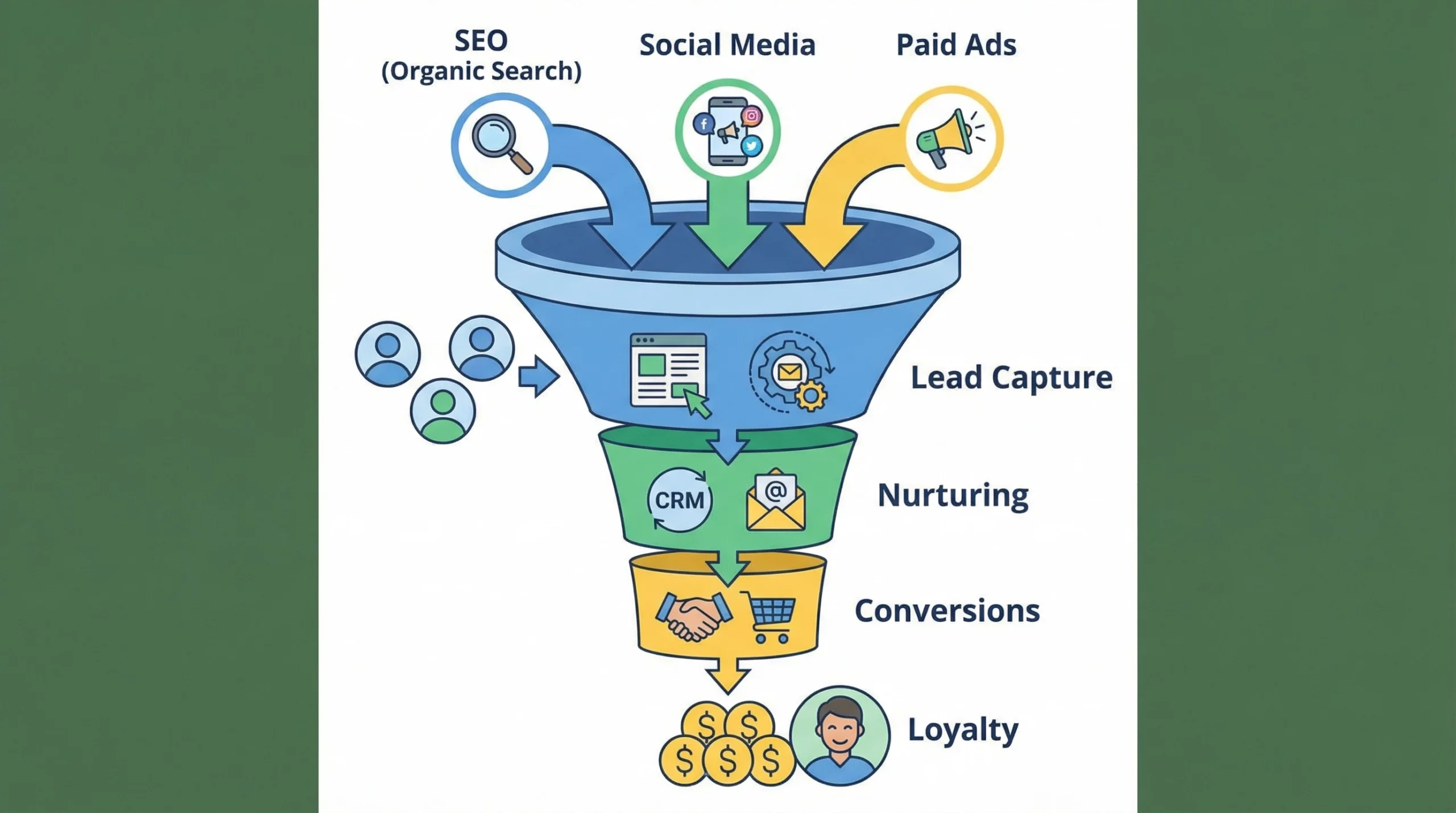
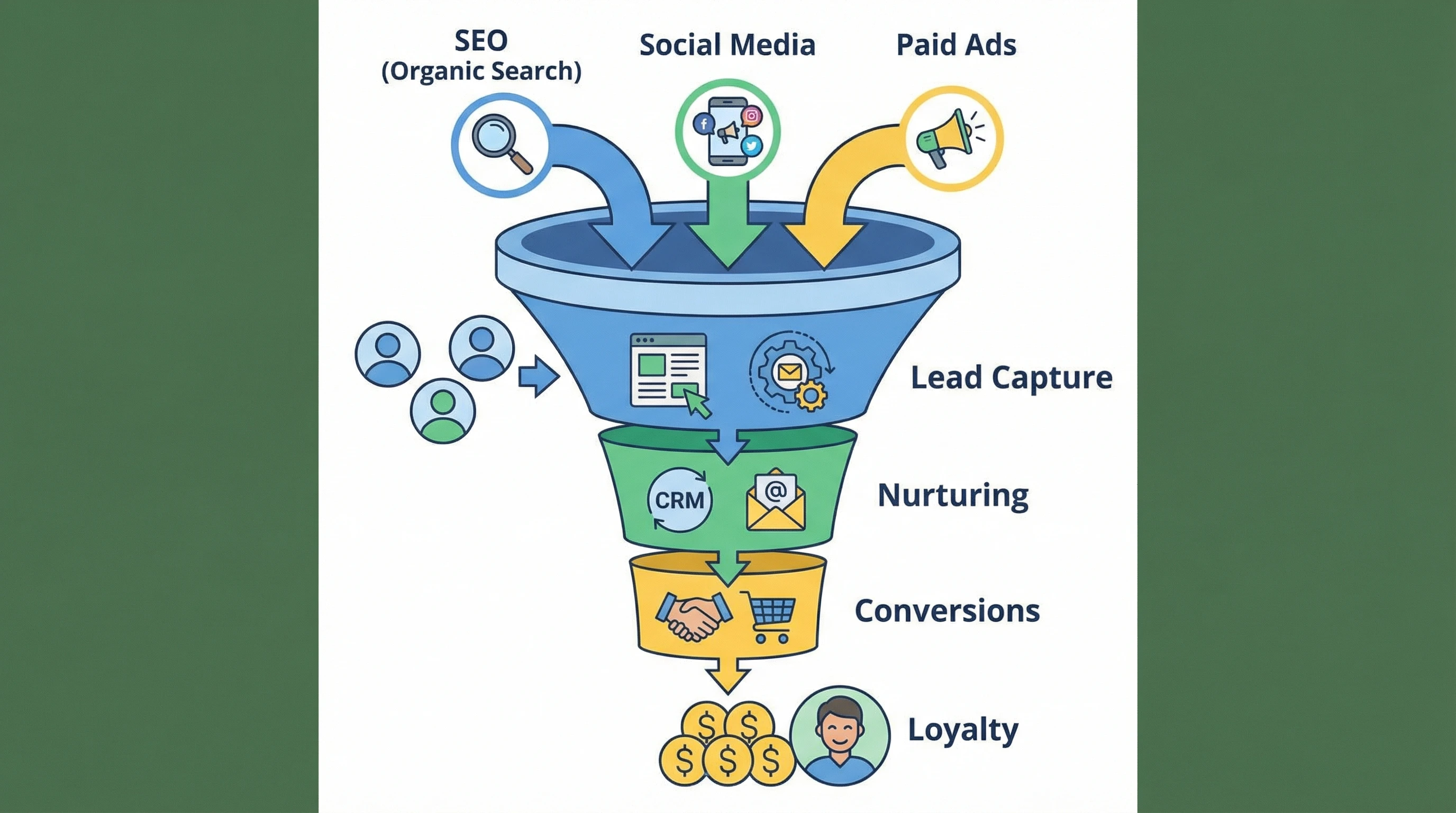
 Creating a sales funnel that really works comes down to numbers, not just creativity. I remember my first funnel flopped because I expected everyone who saw my offer to turn into a customer. That’s not how it works. Instead, I use the 10-3-1 rule: for every 10 people who check out your offer, about three will get involved, and one will actually buy. This rule keeps me realistic and focused on improving each stage, not chasing perfection.
In 2026, sales funnels feel more like a helpful guide for your customer than a sales pitch. AI and automation help personalize the experience so potential buyers get what they need sooner. When I set up my first funnel, I found that being clear and supportive converted more people than the old “hard sell” approach. If you’re just starting out or want a clear blueprint, here is how I’d build a sales funnel step by step from scratch in 2026. Let’s jump right in.
Step 1: Map Your Funnel Stages (The Strategy)
The best way to kick things off is to structure your funnel around four classic stages:
- Awareness. People first find out about your business or solution.
- Interest. They’re curious and want to learn more.
- Decision. They compare you to their other options.
- Action. They make the purchase or take your offer.
What helped me most was writing down one specific problem my product solved. For example, if you offer fitness coaching, your problem might be: “Busy professionals don’t have time to plan healthy meals.” Get specific; it’ll keep your funnel focused and clear at every stage.
Mapping out your stages doesn’t just provide direction. It helps you spot where prospects might fall through the cracks. Each stage is an opportunity to answer questions, overcome doubt, and offer real value that meets your audience where they are.
Step 2: Create an Irresistible Lead Magnet
If you’re wondering how to drive more leads, you need a lead magnet. You want something easy to grab and high value in your potential customer’s mind. I used to overcomplicate this step, but keeping it simple brings better results. The goal is to offer a solution to your prospect’s problem quickly, so they’re willing to exchange an email address for it.
Here are three types of lead magnets that are working in 2026:
- MiniCourse. A short video series delivered over a few days. For example, “3 Days to Better Meal Planning” for fitness, or “Launch Your First Website Fast” for digital marketers.
- AIPrompt List. Give away a list of effective AI prompts your audience can use today. For example, “15 Email Scripts for Real Estate Agents.” It’s both practical and easy to put together.
- Checklist. A one page resource focused on speed and clarity. For example, “Quick Start Checklist to Set Up Your First Funnel.” People love instant results they can use right away.
Choose one that fits your skills and your audience’s biggest pain point. Whenever I got stuck, I asked, “What’s the smallest win I can give someone in five minutes?” That always led me in the right direction for a lead magnet.
Lead magnets have evolved to match what people want. Sometimes it’s a toolkit, swipe file, or template. The main goal is simple: solve a tight problem quickly so your audience trusts you to help with bigger issues down the road.
Step 3: Build Your Landing Page (The Tech)
When it comes to landing pages, simple always wins. Start with a headline that promises a clear result, three bullet points explaining the main benefits, and a short form (usually just name and email). Fancy design is helpful, but clarity is what gets results.
If you’re searching for funnel building software, you’ll see dozens of options. I recommend beginners try free funnel builders like Systeme.io or ConvertKit (now called Kit). Both let you launch a simple funnel in under an hour and cost nothing to get started. If you want more advanced tools, ClickFunnels and GoHighLevel give you full control and automation. I use a free tool when I’m testing a new idea, then switch to a pro tool once I’m ready to grow faster.
- Systeme.io. Free and simple to use, even for complete beginners.
- Kit (formerly ConvertKit). Great automation and beautiful forms, free for small lists.
- ClickFunnels. More templates and advanced features for when sales pick up.
- GoHighLevel. Good for agencies or bigger businesses ready to automate everything.
Don’t let the tech slow you down. My first landing page was ugly but clear, and it brought in my first 30 subscribers. Clarity and speed always beat perfection.
Remember, your landing page should focus on one offer and remove distractions. Avoid extra menus or sidebars. Optimize with a single call to action—“Download Now” or “Get Instant Access.” That way, your conversion rates will stay strong.
Step 4: The “Nurture” Sequence (Email Automation)
I used to think selling happened on the landing page. I quickly learned most people need to hear from you a few times before they’re ready to buy. The money is really in the follow-up. AI tools make it much easier to write and schedule these nurture emails quickly and with empathy, even if writing isn’t your thing.
Here’s a simple “3 Day Welcome Sequence” I use, which you can copy for your funnel:
- Day 1: Send the lead magnet and say thanks. Share a quick story about who you are and how your solution works.
- Day 2: Ask if they’re struggling with a specific problem related to your main offer. This keeps the conversation going and makes your audience feel heard.
- Day 3: Give them more help, then show them how your main offer or service solves their problem in more depth. End with a friendly call to action, “Ready to see real results? Let’s get started.”
I use AI tools like ChatGPT to draft these sequences. I simply give the tool some context, and it spits out three or four email drafts I can personalize. This saves me hours and has actually bumped up my response rates because the tone feels more natural.
Don’t forget to include answers to frequent questions, stories of previous successes, or insights into the results your solution brings. These keep engagement high and build more trust at every step.
Step 5: Drive Traffic (Fuel the Engine)
Even the best funnel won’t work if no one sees it. Driving traffic is how you give your funnel a constant stream of new leads. There are two main ways I’ve found work best:
Organic Traffic (SEO & Social Media)
- SEO. I write blog posts, answer common questions, or create guides on topics my audience searches for. While it builds slowly, this can bring in leads for months to come, all for free.
- Social Media. I pick one platform where my audience hangs out, whether it’s Instagram, LinkedIn, or YouTube. Sharing short tips, video snippets, or quick wins from my lead magnet helps grow organic attention.
You can also do webinars, live streams, or even join relevant groups to share helpful content. Building authority in forums or podcasts you don’t own builds trust slowly, but leads that show up from these sources tend to be much more loyal down the line.
Paid Traffic (Ads)
I wait to run ads until my funnel has proven it can convert. Spending money before you’ve had at least a few organic sales isn’t worth it. Once my funnel is working, I test with small Facebook or Google ad budgets, just $5 to $10 per day, to see if the funnel keeps converting with “cold” traffic. When it does, I slowly scale up from there.
Testing out paid ads can help you grow fast once your foundation is working. Experiment with headlines, images, and platforms to see what delivers the best bang for your buck.
Real World Sales Funnel Examples
Practical examples always help me learn new strategies, so I’ve included two that I’ve seen produce real results. Feel free to tweak these examples for your own niche.
Example A: The Fitness Coach Funnel
- Lead Magnet: Free Meal Plan (PDF or short video series)
- Landing Page: Simple form asking for name and email
- Email Sequence: Day 1 delivers meal plan. Day 2 offers quick tips and empathy (“Are you struggling with late night snacking?”). Day 3 invites to a free coaching call
- Main Offer: Paid personalized coaching (offered during or after the call)
Example B: The Affiliate Marketer Funnel
- Lead Magnet: Free Guide: “10 Quick SEO Wins for Your Website”
- Landing Page: Clean layout, headline offering a specific benefit, and simple opt in form
- Email Sequence: Day 1: Download the guide. Day 2: Empathy email (“Not seeing instant results? That’s normal. Here’s what to do next…”). Day 3: Recommends an affiliate SEO tool and explains how it helps.
- Main Offer: Affiliate product promoted with a personal story and bonus for taking action
Both of these funnels follow the steps I laid out above and can be adapted for almost any type of business or offer.
Another great example for an online course creator is a free “lesson one” video or sample workbook. After the user opts in, they receive additional email support and an invitation to upgrade to the paid course with a bonus for fast action. This works in coaching, SaaS, or local service businesses too—the format of problem, quick win, nurturing trust, and a core offer stays the same.
FAQ: How to Build a Sales Funnel Step by Step
Can I build a funnel for free?
Yes, you can build a sales funnel without spending anything upfront. Tools like Systeme.io and Kit offer free starter plans. I started with free tools and only upgraded when I needed more features or higher limits.
What is the 10-3-1 Rule in sales?
The 10-3-1 rule means that, on average, for every 10 interested people who enter your funnel, three will interact with your follow up and one will make a purchase. I use this as a simple reality check when I’m deciding how much traffic I need to get one sale.
What are some good funnel building tools?
- Systeme.io. Free plan for new users
- Kit (ConvertKit). Simple automation and forms
- ClickFunnels or GoHighLevel. Best for scaling
Do I need a website to use a sales funnel?
No, most funnel builders let you host your funnel with them. You can connect a domain later for branding, but you don’t need a full website at first. I launched my first funnel with just the builder’s default pages.
How do I get more people into my funnel?
Focus on organic content—blog posts, social media posts, YouTube videos—or try partnerships with others in your industry. Paid ads work, but testing with organic traffic first saves money and helps you learn what your audience wants. Hosting regular Q&A sessions or interviews with experts in your field can also help you reach wider audiences and get more eyes on your funnel.
The 5 Steps to Build Your First Sales Funnel
- Write down the one problem you solve. Keep everything focused there.
- Pick a quick, high value lead magnet your audience actually wants.
- Create a landing page with a clear headline and easy opt in form.
- Use email automation (with the help of AI) to follow up and build trust.
- Start driving organic traffic, then add paid ads once your funnel works.
Building a funnel doesn’t mean being perfect or fancy. It means guiding buyers from “I’m curious” to “I’m in” as simply as possible. Once your funnel starts working, you’ll find yourself tweaking, experimenting, and improving as you go.
Now that you know how to build a sales funnel from scratch, you’re ready for the next step. The tools you choose can make or break your experience. If you want to see my favorites and learn what to look for, check out the next guide: Top 7 CRM & Funnel Builders for 2026.
Awesome article, simple, straightforward and nice step by step. Could not found this article at a better time, looking to implement a new strategy. Sets more realistic goals and expectations for starting out. Especially looking forward to using the “3 Day Welcome Sequence”. Already looking into the systems provided and eager to set them in motion.
Hi John,
I love when that happens! Timing is everything in execution.
You are going to love the results from that “3-Day Welcome Sequence.” It is arguably the single highest-ROI automation you can set up because it builds trust immediately without you having to lift a finger.
And I’m really glad the “realistic goals” part resonated. Too many people quit because they expect a home run in week one. Building a solid foundation takes a bit of time, but once it’s running, it’s worth every second.
Good luck getting those systems in motion!
Great step-by-step guide — I like how you emphasized building the funnel around the customer journey rather than just stacking pages together. Mapping awareness, nurturing, and conversion makes it much clearer where prospects might drop off and what to improve.
In your experience, which stage tends to be the hardest for beginners to get right — attracting traffic, nurturing leads, or the actual conversion step?