
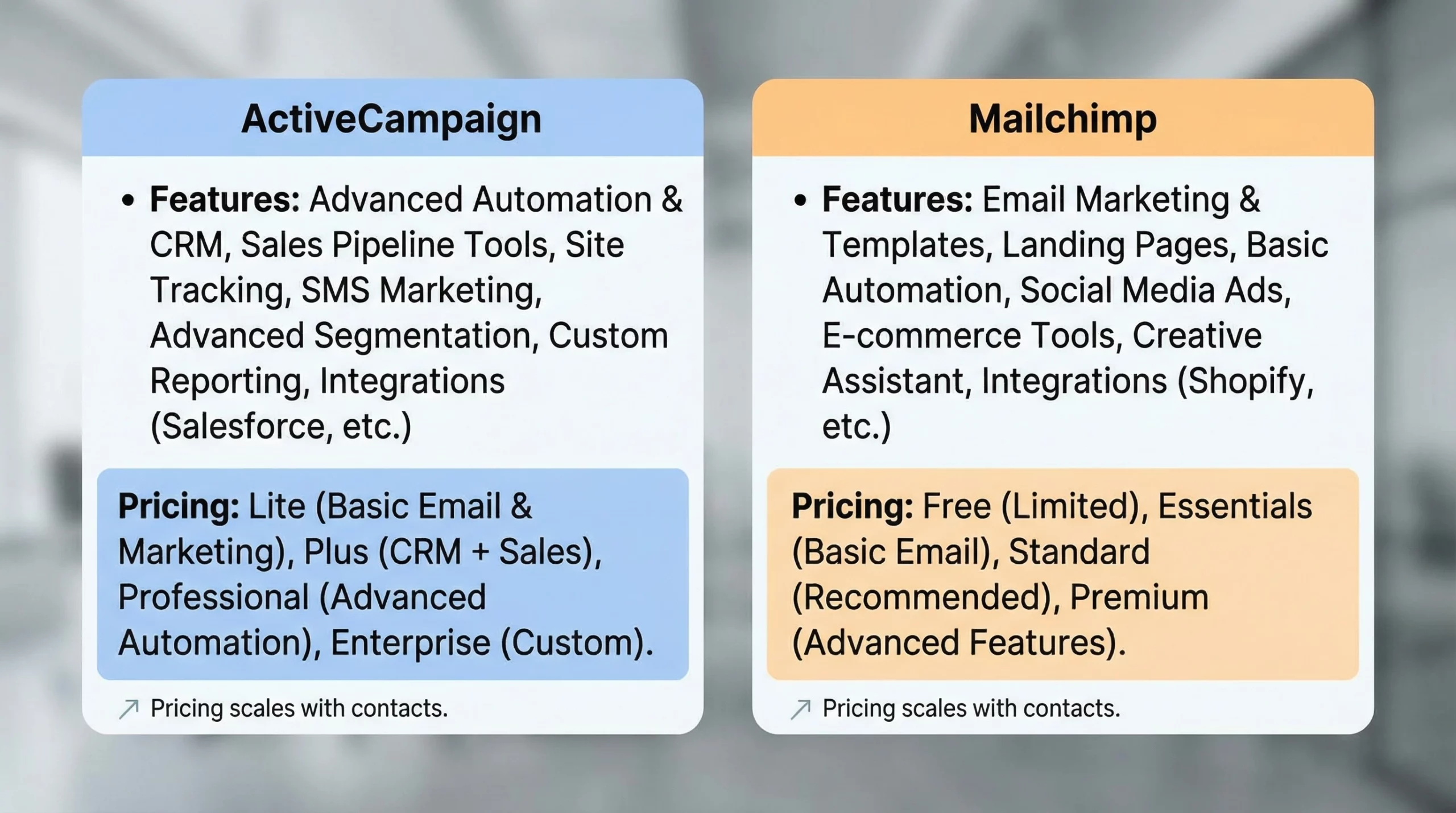
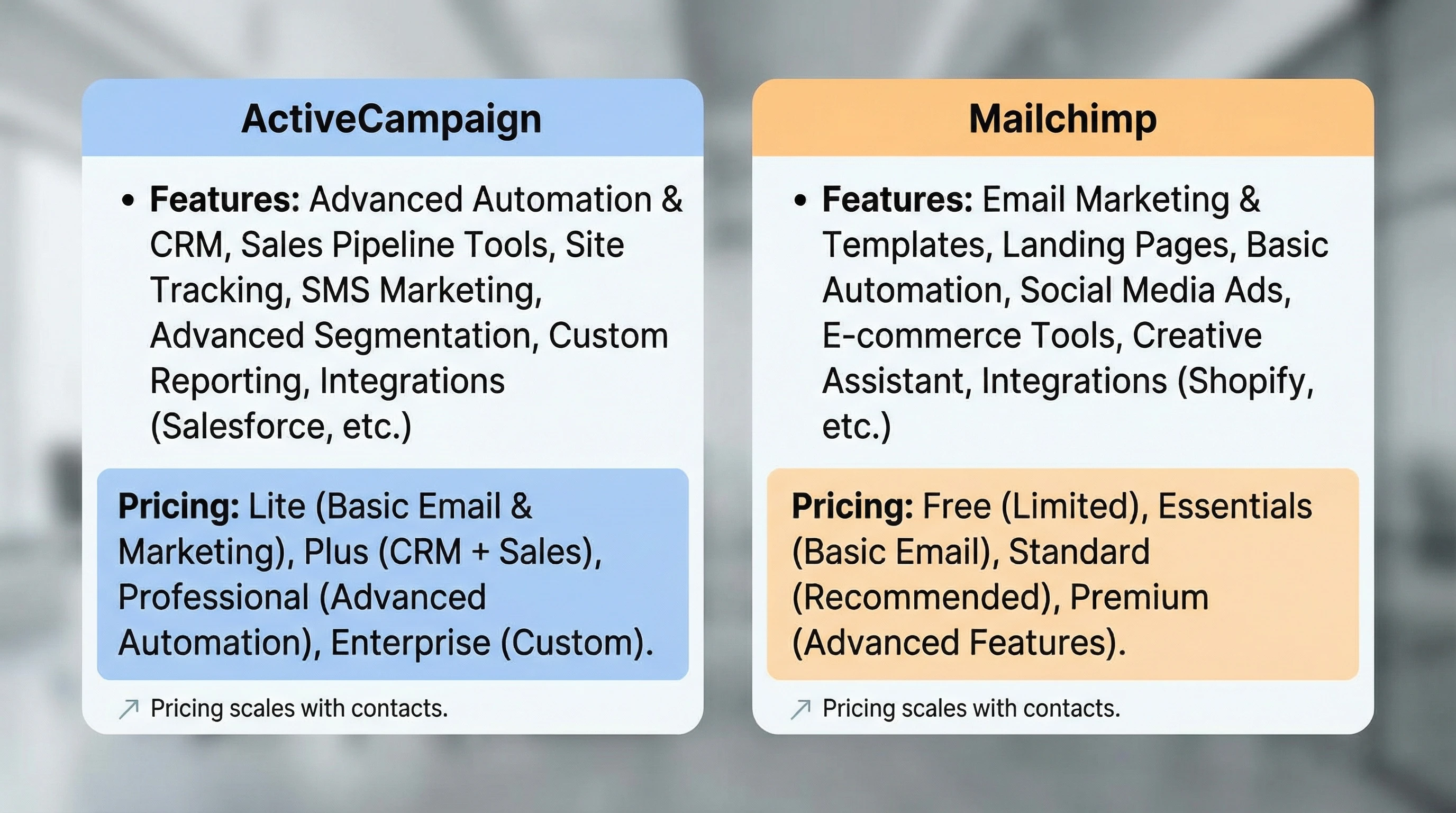
Since the beginning of this year, I’ve noticed a flood of angry posts in marketing groups about Mailchimp’s latest round of price hikes. Most of these complaints start with the same story: people sign up for the ‘free’ Mailchimp plan, only to realize it’s hardly usable for real businesses anymore. If you have over 500 contacts or want to set up basic automation, you’re forced onto a paid plan. If your list is growing, sticking with Mailchimp means your bill will start to climb, and fast.
This change is hitting marketers hard, especially those who run regular campaigns. With limited emails, almost no automation, and strict contact limits, the ‘free’ plan feels more like a teaser. Most experts I talk to now treat Mailchimp’s free tier as an extended trial, not a platform you can actually use to build a business.
Meanwhile, ActiveCampaign has been winning a lot of business from marketers who want to automate and scale without getting nickeled and dimed. As someone who’s helped dozens of clients switch from Mailchimp to ActiveCampaign, I’ve seen the difference up close. If you feel like you’re paying more and getting less on Mailchimp, you’re not alone. You have better choices—you don’t have to settle.
Overview: ActiveCampaign and Mailchimp in 2026
What is Mailchimp?
Mailchimp is well known as an entry level email tool that’s easy to start with. For years, it was the default option for anyone who wanted basic newsletters. The interface is friendly, and you can set up a basic campaign in minutes. But as Mailchimp grew, so did its prices and limitations. As of 2026, almost every powerful feature sits behind a paywall. Automation is basic, and billing policies create headaches when your list starts to grow.
Who is Mailchimp Best For?
- People sending one-off newsletters without automation
- Small lists (under 500 contacts)
- Hobbyists who don’t plan to scale soon
Mailchimp Pros & Cons
Pros:
- Simple and easy to use for beginners
- Large template library for newsletters
- Recognizable brand with lots of tutorials
Cons:
- Charges for unsubscribes unless you archive them manually
- Automation is very basic and linear
- Poor deliverability compared to pro tools
- Free plan is extremely limited in 2026
- Expensive once your list grows past a few hundred people
What is ActiveCampaign?
ActiveCampaign is built for marketers who want to automate more than a simple newsletter. It offers a visual automation builder, one of the best ways I’ve found to map customer journeys, split campaigns based on behavior, and drive real revenue on autopilot. Compared to Mailchimp, the setup is a little more involved at first, but the payoff is a lot more control and better results. The focus on marketing automation and personalized emails makes it a favorite among businesses wanting to move beyond the basics.
Who is ActiveCampaign Best For?
- Businesses that want advanced automation beyond newsletters
- Marketers who care about deliverability
- People who want to pay only for engaged, active contacts
- Small businesses and agencies looking to scale
ActiveCampaign Pros & Cons
Pros:
- Only charges for active contacts (you don’t pay for unsubscribes)
- Visual automation builder for branching campaigns
- High deliverability rates (inbox more than promotions folder)
- Integrations with ecommerce, CRM, and popular apps
- Clear pricing as you scale
Cons:
- Takes time to learn the visual automation builder
- Fewer pretty templates than Mailchimp
- Not the cheapest for tiny, nonbusiness lists
ActiveCampaign vs Mailchimp: Fast Comparison Table (2026)
| Feature | Mailchimp | ActiveCampaign |
|---|---|---|
| Charges for Unsubscribes | Yes, you pay until you manually archive | No, charges for active contacts only |
| Automation Style | Linear (Customer Journey Builder, basic “If-Then” only) | Visual (Drag and Drop Visual Automation Builder, branching) |
| Email Deliverability | ~80% (often hits Promotions tab) | ~93% (lands in Primary tab more often) |
Round 1: The Real Price of Billing – Where Mailchimp Fails
Here’s something I wish more people knew before they started growing their list with Mailchimp. If a user unsubscribes on Mailchimp, you still get billed for that contact unless you manually locate and archive them. This means you’re paying for people who will never see your emails again. If you send a lot of traffic or run big launches, these dead contacts can pile up and get expensive fast. I’ve seen clients pay hundreds extra a year just from this billing policy. It can be a sneaky budget drain over time.
ActiveCampaign fixes this. Their policy is clear: you only pay for contacts who are currently able to receive emails. Unsubscribes don’t show up on your bill. You spend less time cleaning your lists and more time running real campaigns. If you want an accurate bill and less manual busywork, this part alone is a big reason I recommend moving. On top of that, ActiveCampaign’s straightforward billing helps reduce financial planning headaches for your team.
Round 2: Automation – Basic vs. Branching
Mailchimp’s Customer Journey Builder sounds impressive, but it works more like a giant checklist: “If this, then that.” You can send a welcome email or a birthday coupon, but as soon as you want to split your audience or create multiple complex paths, it gets clunky and hard to manage. This is enough for simple updates or launches, but not for true automation that grows revenue. There is little room to change a customer’s path without starting from scratch or duplicating efforts.
ActiveCampaign gives you a visual automation builder that’s much closer to what pro marketers need. Every sequence is mapped out visually, so you can split paths, wait for behaviors, and trigger new campaigns as people act. For example, if someone clicks one link, they get a particular sequence. If they reply, they get another. I’ve used ActiveCampaign to set up full “if-this-then-that with branches” campaigns in under an hour. If you care about sending the right message at the right time, this flexibility is really important. The drag and drop visual workflow lets you see the big picture and easily tweak automations as your business grows.
Round 3: Deliverability (Why Promotions Tab Kills ROI)
This is the part that most people ignore until results start to drop. Mailchimp emails end up in the Promotions tab at Gmail for a lot of my clients, especially for bigger lists or sales-focused industries. This means lower open rates, fewer clicks, and fewer sales. Every percentage point you lose on deliverability becomes money lost from each campaign. Deliverability can make the difference between a campaign’s success or total silence.
ActiveCampaign has repeatedly outperformed Mailchimp in inbox placement tests. In most cases, open rates went up by double digits once I migrated clients to ActiveCampaign, even when sending to the exact same list. Their infrastructure is managed for deliverability, so you’re more likely to hit the Primary inbox and get real attention instead of being buried with marketing spam. For brands where every open and click means revenue, this is hugely important. ActiveCampaign also regularly updates their sending policies to help keep their deliverability rates high for all users.
ActiveCampaign vs Mailchimp Pricing in 2026: The Hidden Costs
In 2026, Mailchimp’s Standard plan jumps in price as soon as your contacts grow. It starts cheaper for tiny lists, but as features and subscribers add up, bills get steep. Plus, because you pay for unsubscribes unless you constantly clean up, your real cost per subscriber is higher than it looks on paper. Add in upsells for extra features, and the costs can be surprising. If you don’t keep an eye on your list hygiene, you could end up paying hundreds more than you expect each year.
ActiveCampaign’s Lite plan is a straight subscription based only on how many active contacts you’re emailing. There’s no hidden charge for emails that bounce, unsubscribes, or ghost contacts. Pricing is easy to predict, which makes monthly planning easy. For most businesses running revenue driven campaigns, the savings become obvious as your list grows past 1,000 contacts. I’ve watched several clients break even on the migration costs just from a few months of ActiveCampaign’s fairer pricing. If you’re running ongoing campaigns where list size fluctuates, these transparent costs can make budgeting much more predictable.
Which Should You Choose? My Honest Advice
If you’re just starting out and have under 500 contacts, Mailchimp can still do the job for a simple, one way newsletter. Maybe you run a club, a hobby blog, or you’re only emailing friends and family. Mailchimp’s free plan is good for that and will be familiar for those just dipping their toes into email marketing.
If you want to grow an audience, make real money, or automate anything advanced, I always recommend switching to ActiveCampaign. You’ll get better results, lower your risk of billing surprises, and save hours not wrestling with dead contacts and limited automations. As your business and marketing needs grow, you’ll quickly spot how much more efficient and powerful ActiveCampaign is compared to Mailchimp’s more limited structure.
- Stay on Mailchimp if:
- Your list is always under 500 contacts
- You send no more than one or two emails per week
- Automation and segmentation aren’t needed
- Switch to ActiveCampaign if:
- You’re a business aiming to make more sales through repeat, automated campaigns
- Advanced automation, segmentation, or split paths matter to you
- You want fair, simple pricing just for real, active contacts
How to Move from Mailchimp to ActiveCampaign (Without the Headache)
I’ve handled dozens of Mailchimp to ActiveCampaign migrations, and here’s what works best for a smooth switch:
- Export your engaged contacts only. Don’t waste time migrating unsubscribes and bounced emails.
- Map your Mailchimp campaigns so you know exactly which automations to rebuild.
- Make use of ActiveCampaign’s onboarding—they’ll even import your list and help set up sequences for free.
- Test your deliverability to make sure every template lands in the inbox, and tweak subject lines if needed. Keep an eye out for changes in open rates.
The switch might seem intimidating, but the results have always made it worth it for every serious marketer I’ve helped. If you need more info, both ActiveCampaign and many reputable consultants offer step-by-step help, and the process can usually be finished in a single afternoon. The key is to prepare in advance and clean your data before moving it for the best outcome.
Real User Feedback: Why Are Pro Marketers Switching?
- Many pro marketers share that their revenue per email jumped after moving to ActiveCampaign, mainly because higher deliverability leads to more opens and clicks.
- People value the visual automation builder, saying it makes running advanced campaigns a lot faster and saves hours of manual work each week.
- Replies on marketing forums often mention the pain of Mailchimp’s billing for unsubscribes, showing this isn’t just a rare complaint. It’s a real pattern many small businesses experience as they scale.
- I’ve never had a client regret moving, but I’ve had plenty ask to switch away from Mailchimp after a few months of chasing down lost features and rising bills.
It’s worth mentioning that the migration process is smoother than most expect, and the improved automation tools in ActiveCampaign often open up new marketing ideas that weren’t possible or practical in Mailchimp. Whether you’re running weekly promos, segmenting by purchase activity, or personalizing your content, users consistently praise the step up in flexibility.
Verdict: ActiveCampaign vs Mailchimp (2026)
Both tools allow you to send emails, but that’s where the similarities end for anybody looking to run a real business. Mailchimp still dominates for casual users and small static lists, but for most pro marketers, the hidden costs and basic automation are real problems. ActiveCampaign’s pricing, automation, and better deliverability make it my first choice for anyone looking to run a revenue driven business in 2026.
If you’re tired of Mailchimp’s surprise charges or limited customer journeys, moving to ActiveCampaign is easier than it seems. It usually pays for itself after a few sends. The days of using Mailchimp’s free plan forever are over. When you’re ready to treat your audience like a business, ActiveCampaign is the smarter choice. Don’t let rising costs and stubborn limitations hold you back from growing and serving your subscribers. Your next-level cool email strategy starts with stepping up to a platform built for business growth, not just sending newsletters.
Definitely an interesting and applicable topic. Article is perfect length, not too long and answers all my questions. Provides great comparison and helps me make a more informed decision. Appreciate that it is broken down into easy understandable terms. The comparison charts are super helpful. Easy read even for the material covered.
Thanks, John! I really appreciate the feedback. In the fast-moving world of email marketing tools for 2026, keeping things ‘easy to understand’ is a challenge, so I’m glad the format worked for you.
I actually update this guide every quarter to ensure the pricing and feature comparisons stay accurate. If you end up switching to ActiveCampaign, feel free to pop back here—I’d love to hear if the ‘migration’ process was as smooth as they claim!
This is one of the clearest breakdowns of ActiveCampaign vs Mailchimp I’ve read in a while. I really appreciate how you focused not just on features, but on real-world billing headaches and long term scalability. The point about paying for unsubscribes on Mailchimp is something many beginners overlook until their list grows and costs spike. Your explanation of visual automation versus linear journeys also makes the differences easy to understand, especially for revenue-driven marketers. Deliverability is another huge factor people ignore, so highlighting inbox placement and ROI impact was smart. I also like that you gave balanced advice, Mailchimp still has a place for small hobby lists, but serious businesses need stronger automation. This comparison feels practical, experience-based, and genuinely helpful for marketers trying to choose wisely in 2026.
This post lays out a clear and practical comparison between ActiveCampaign and Mailchimp, and it does a great job showing why many marketers are leaning toward more advanced automation tools as they scale. The side‑by‑side breakdown makes it easy to see the differences in depth—Mailchimp still works well for simple, entry‑level email needs, but Active Campaign’s stronger automation, CRM capabilities, and testing options make it a better fit for businesses that want to personalize their customer journeys or run more sophisticated campaigns. It’s a helpful overview for anyone trying to decide whether they’ve outgrown basic email marketing and are ready for a platform that supports more strategic, long‑term growth.